2.

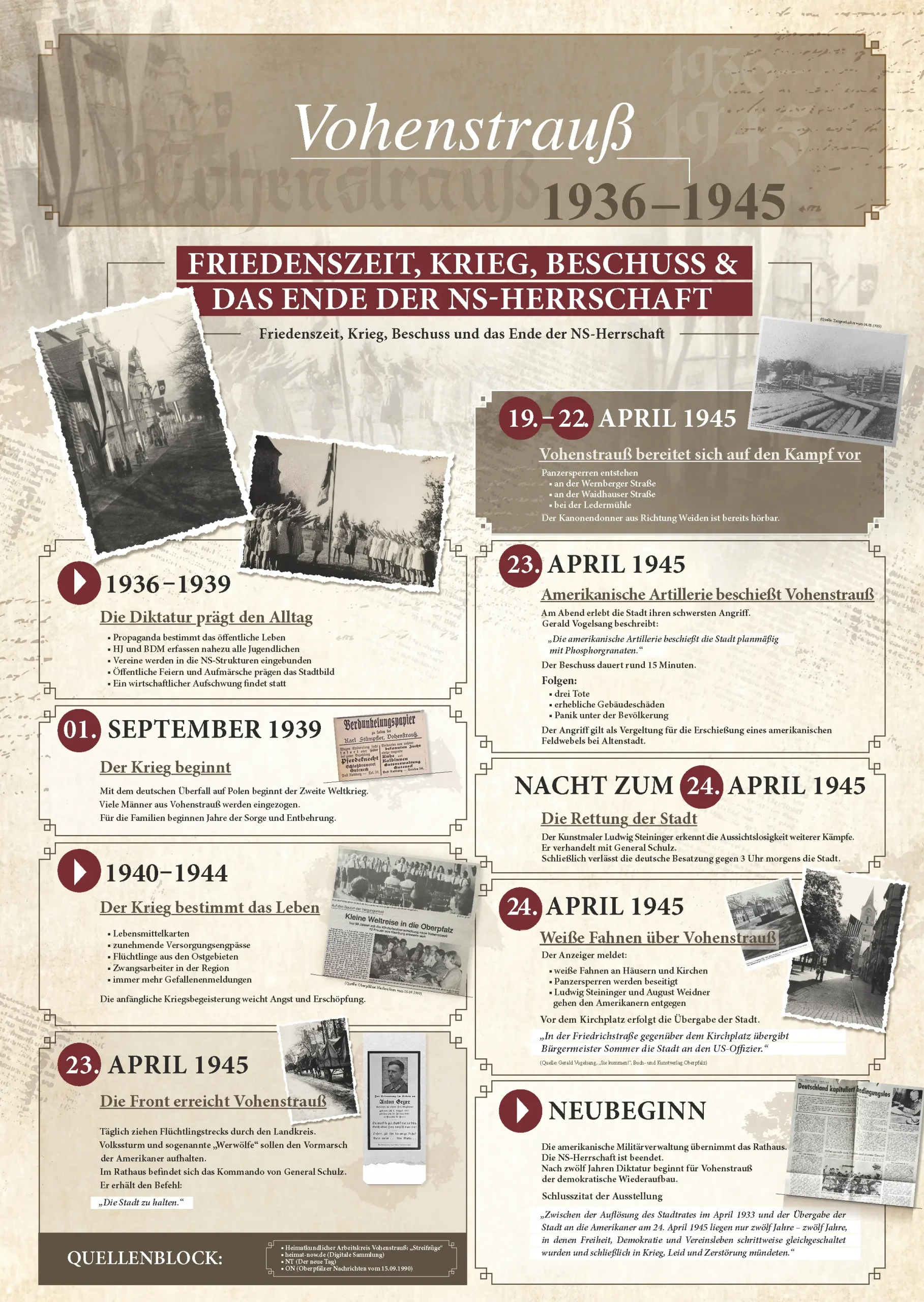
Vohenstrauß 1936–1945

Peacetime, War, Bombardment, and the End of Nazi Rule

Peacetime, War, Bombardment, and the End of Nazi Rule

document.addEventListener('DOMContentLoaded', () => { const tafel = document.querySelector('.tafel'); const title = document.querySelector('.title'); if (!tafel || !title) return; function positionTafel() { if (window.innerWidth <= 1024) { tafel.style.top = ''; tafel.style.opacity = ''; tafel.style.pointerEvents = ''; return; } const tafelRect = tafel.getBoundingClientRect(); const titleRect = title.getBoundingClientRect(); const difference = titleRect.top - tafelRect.top; const currentTop = parseFloat(getComputedStyle(tafel).top) || 0; tafel.style.top = (currentTop + difference) + 'px'; checkTafelVisibility(); } function checkTafelVisibility() { if (window.innerWidth = pageBottom - offsetBottom) { tafel.style.opacity = '0'; tafel.style.pointerEvents = 'none'; } else { tafel.style.opacity = '1'; tafel.style.pointerEvents = ''; } } positionTafel(); window.addEventListener('resize', positionTafel); window.addEventListener('load', positionTafel); window.addEventListener('scroll', checkTafelVisibility, { passive: true }); const observer = new ResizeObserver(() => { positionTafel(); }); observer.observe(title); if (tafel.offsetParent) { observer.observe(tafel.offsetParent); } }); .tafel { transition: opacity 0.85s ease; }
1936-1939

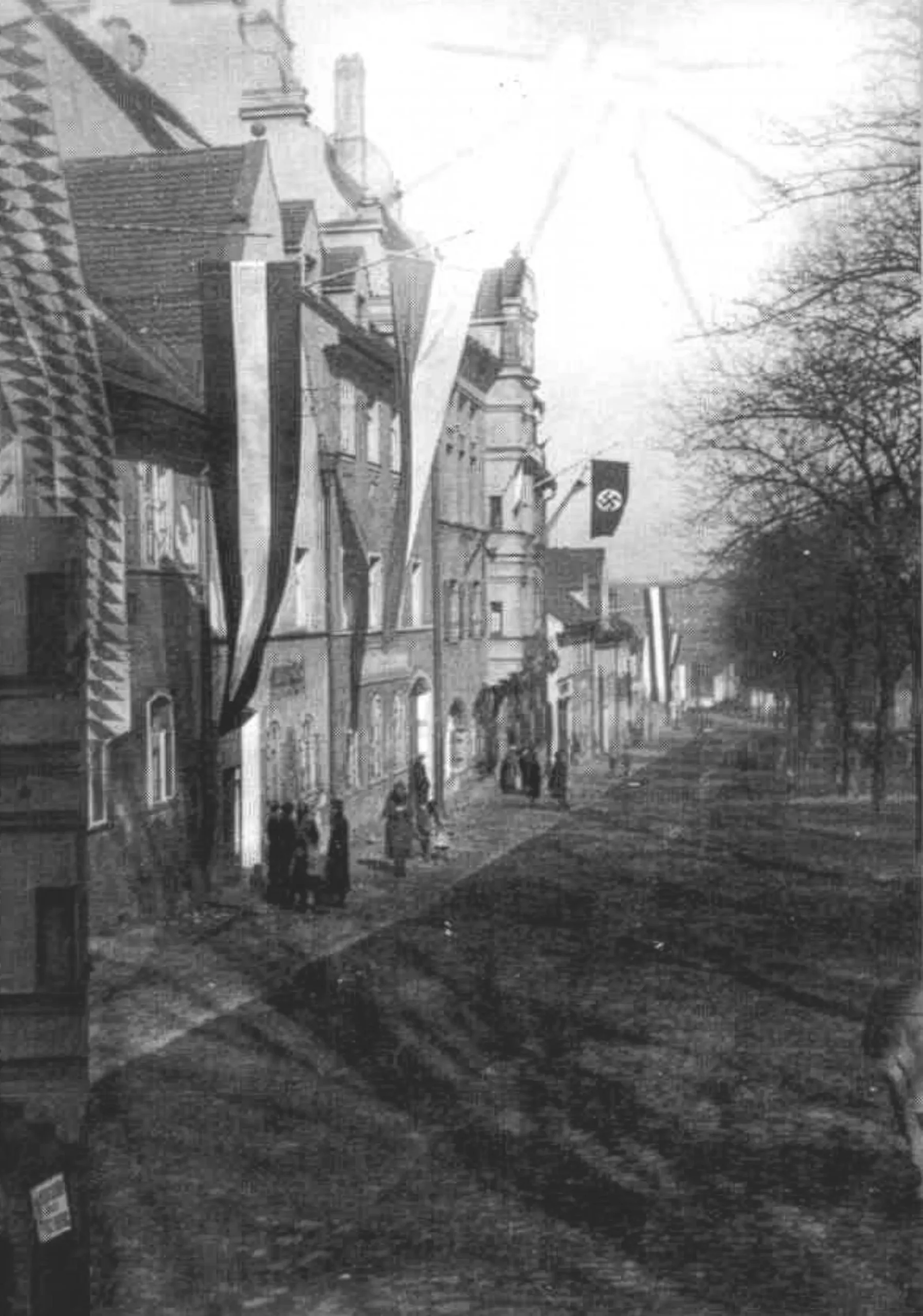
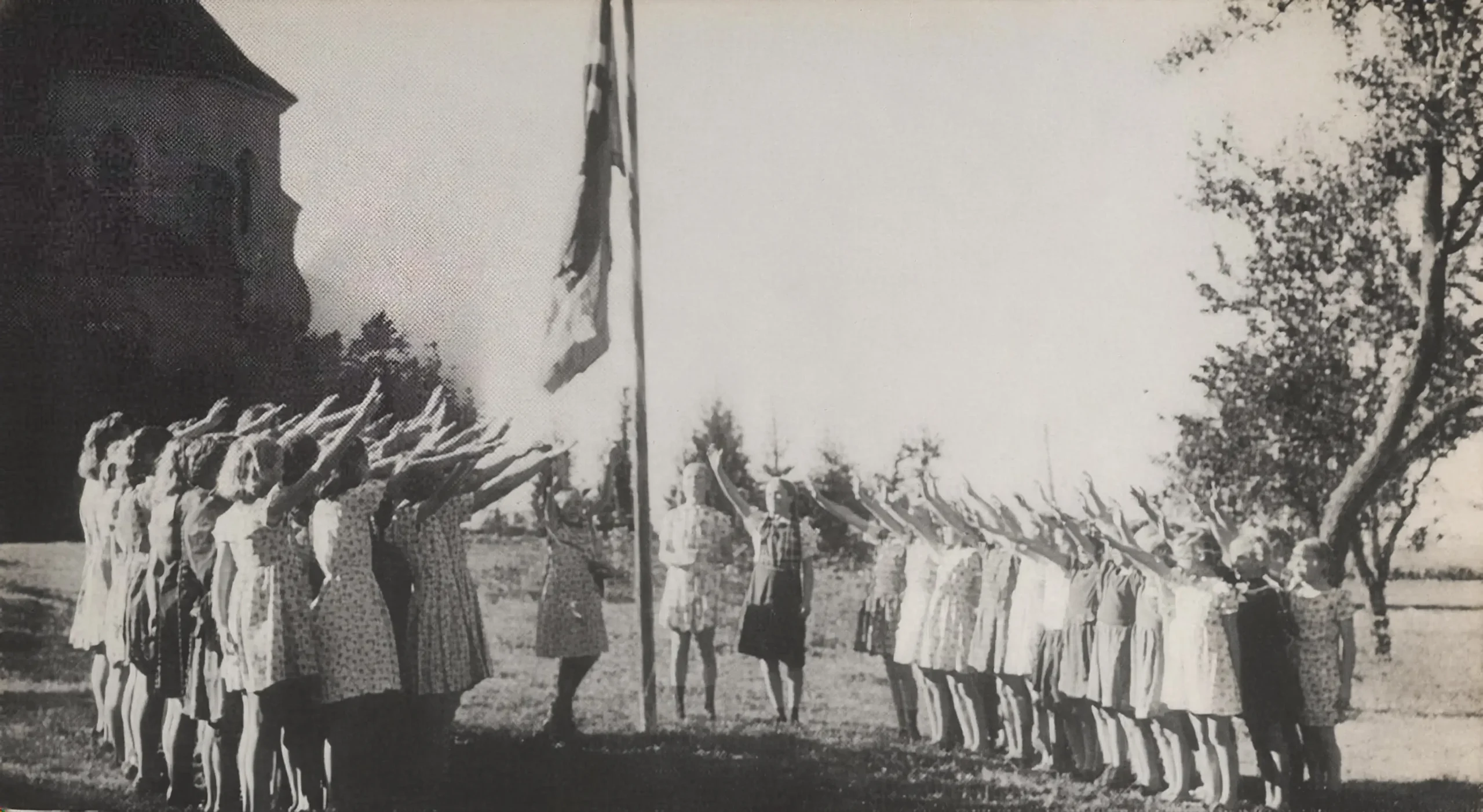
The dictatorship shapes everyday life

  • Propaganda shapes public life
  • The HJ and BDM encompass nearly all young people
  • Clubs are integrated into Nazi structures
  • Public celebrations and parades are a common sight in the city
  • An economic upswing is taking place
September 1, 1939

The war begins

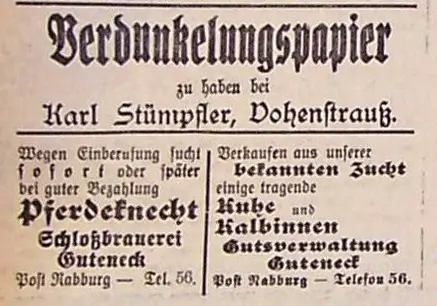
World War II began with the German invasion of Poland.

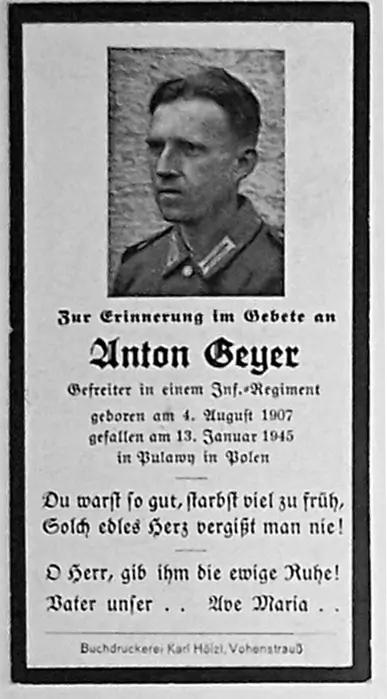
Many men from Vohenstrauß are being drafted.

For the families, years of worry and hardship begin.

1940-1944

War shapes our lives

  • Food Stamps
  • Increasing Supply Shortages
  • Refugees from the Eastern Territories
  • Forced Laborers in the Region
  • More and More Reports of Casualties

The initial enthusiasm for the war gives way to fear and exhaustion.

April 23, 1945

The front reaches Vohenstrauß

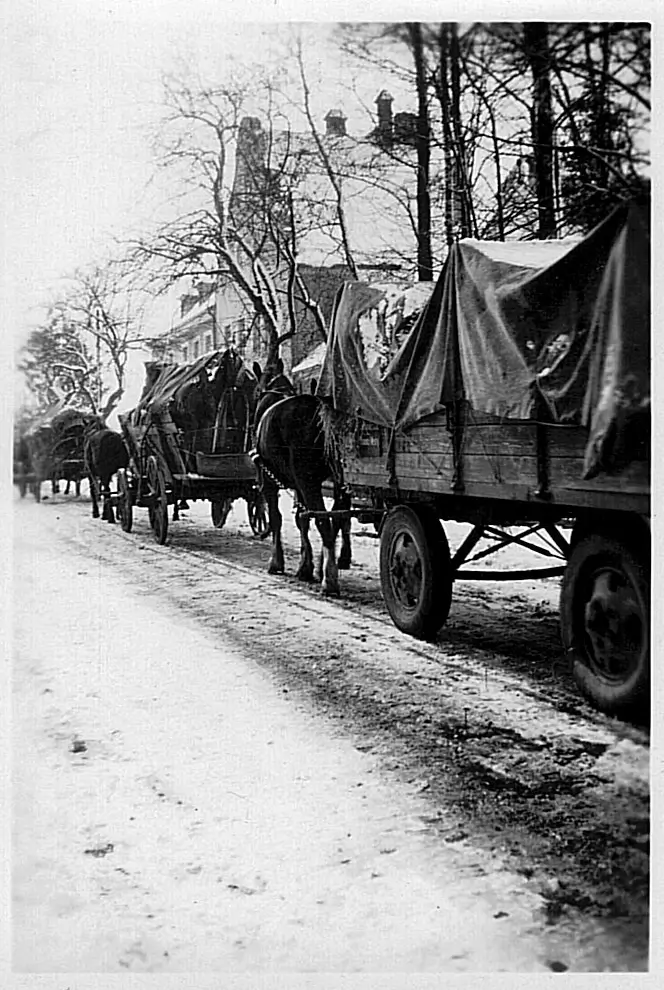
Every day, columns of refugees pass through the county. The Volkssturm and the so-called “Werewolves” are tasked with halting the American advance.

General Schulz’s command post is located in City Hall.

He receives the order:

“To hold the city.”

April 19–22, 1945

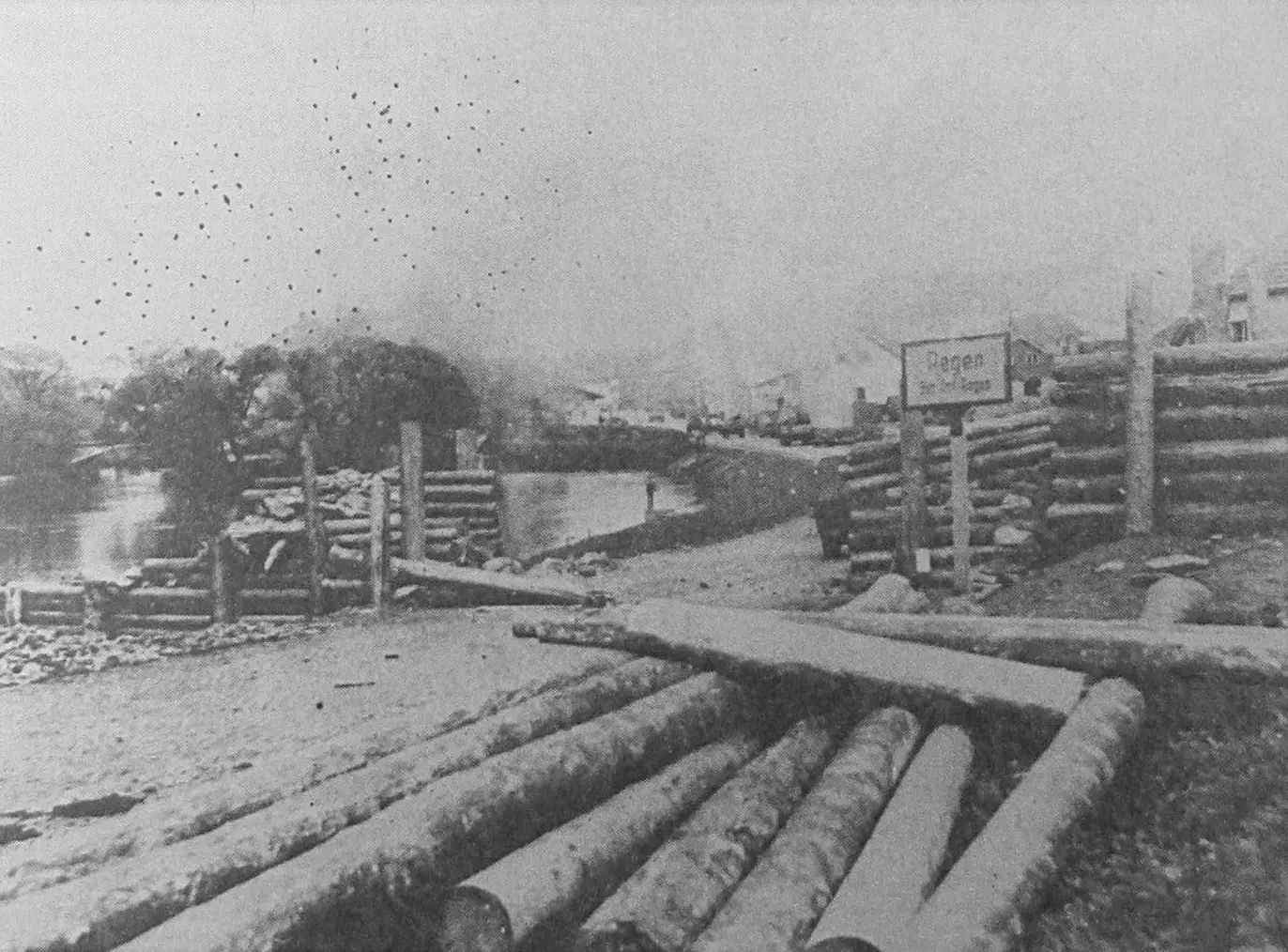
Vohenstrauß is preparing for the fight

Anti-tank barriers are being constructed

  • on Wernberger Street
  • on Waidhauser Street
  • at the Ledermühle

The sound of cannon fire coming from the direction of Weiden can already be heard.

April 23, 1945

U.S. artillery fires on Vohenstrauß

That evening, the city suffered its worst attack.

Gerald Vogelsang describes:

“The American artillery is shelling the city with phosphorus shells as planned.”

The shelling lasts about 15 minutes.

Consequences:

  • three dead
  • significant damage to buildings
  • Panic Among the Population

The attack is considered retaliation for the shooting of an American sergeant near Altenstadt.

The night of April 24, 1945

The Rescue of the City

The painter Ludwig Steininger realizes that further fighting is futile.

He is negotiating with General Schulz.

Finally, around 3 a.m., the German garrison leaves the city.

April 24, 1945

White Flags Over Vohenstrauß

The Anzeiger reports:

  • white flags on houses and churches
  • Tank barriers are being removed
  • Ludwig Steininger and August Weidner go to meet the Americans

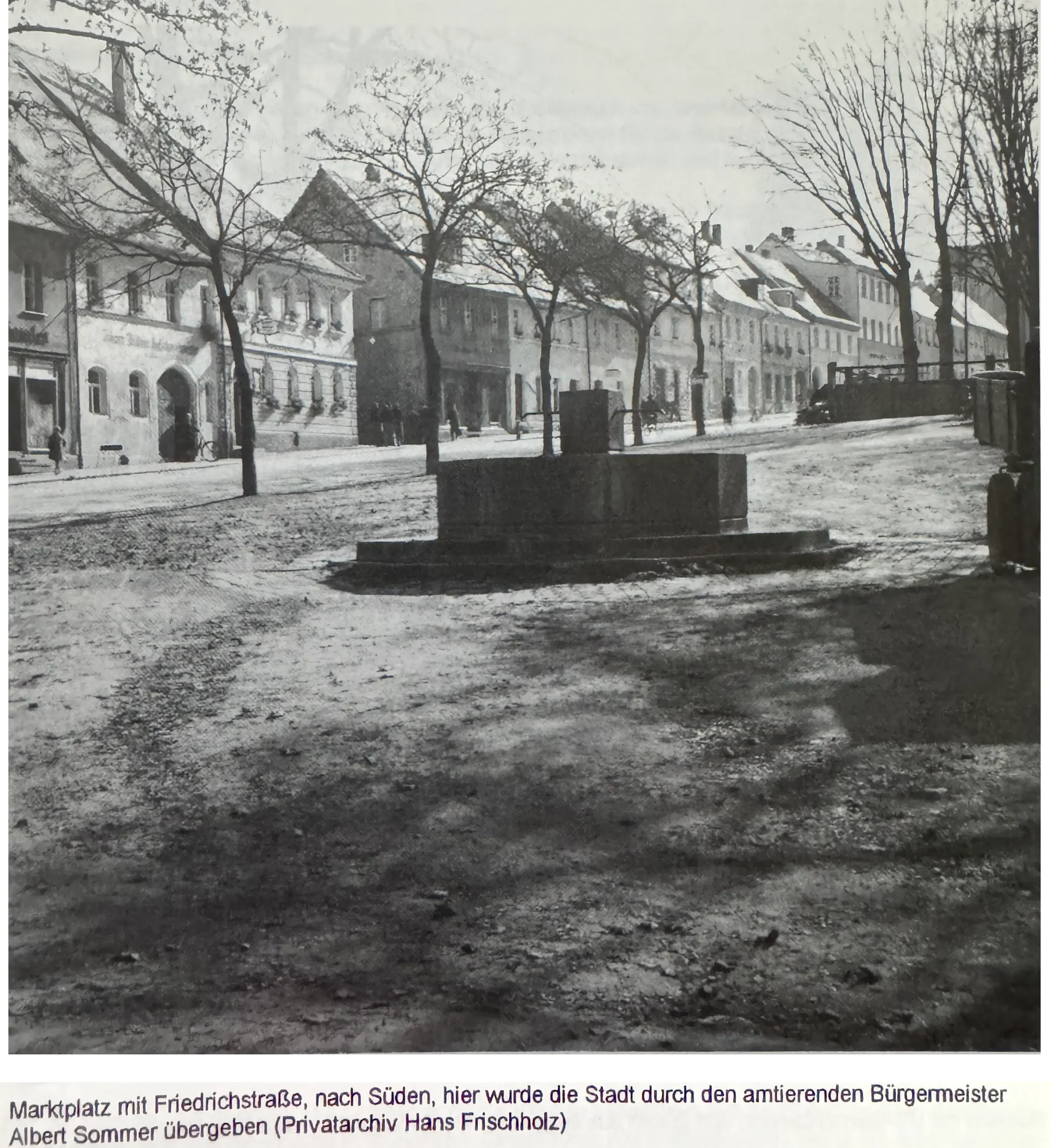
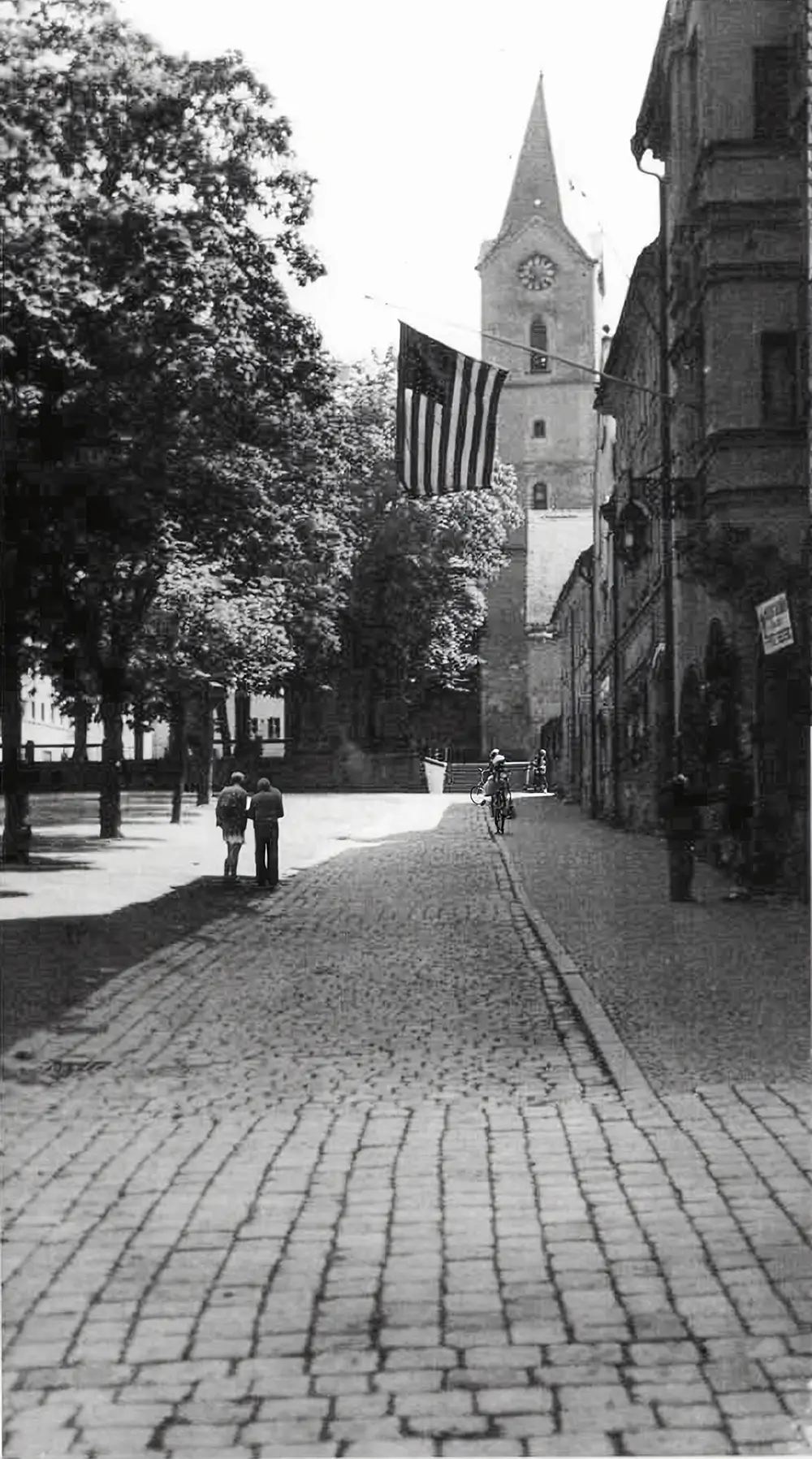
The handover of the city takes place in front of the church square.

“On Friedrichstraße, across from the church square, Mayor Sommer hands over the city to the U.S. officer.”

A New Beginning

The U.S. military administration takes over City Hall.

Nazi rule has come to an end.

After twelve years of dictatorship, the democratic reconstruction of Vohenstrauß begins.

Closing quote from the exhibition

“Only twelve years passed between the dissolution of the city council in April 1933 and the handover of the city to the Americans on April 24, 1945—twelve years during which freedom, democracy, and community life were gradually brought into line and ultimately led to war, suffering, and destruction.”

Sources section

  • Vohenstrauß Local History Working Group: “Streifzüge”
  • heimat-now.de (Digital Collection)
  • NT (The New Day)
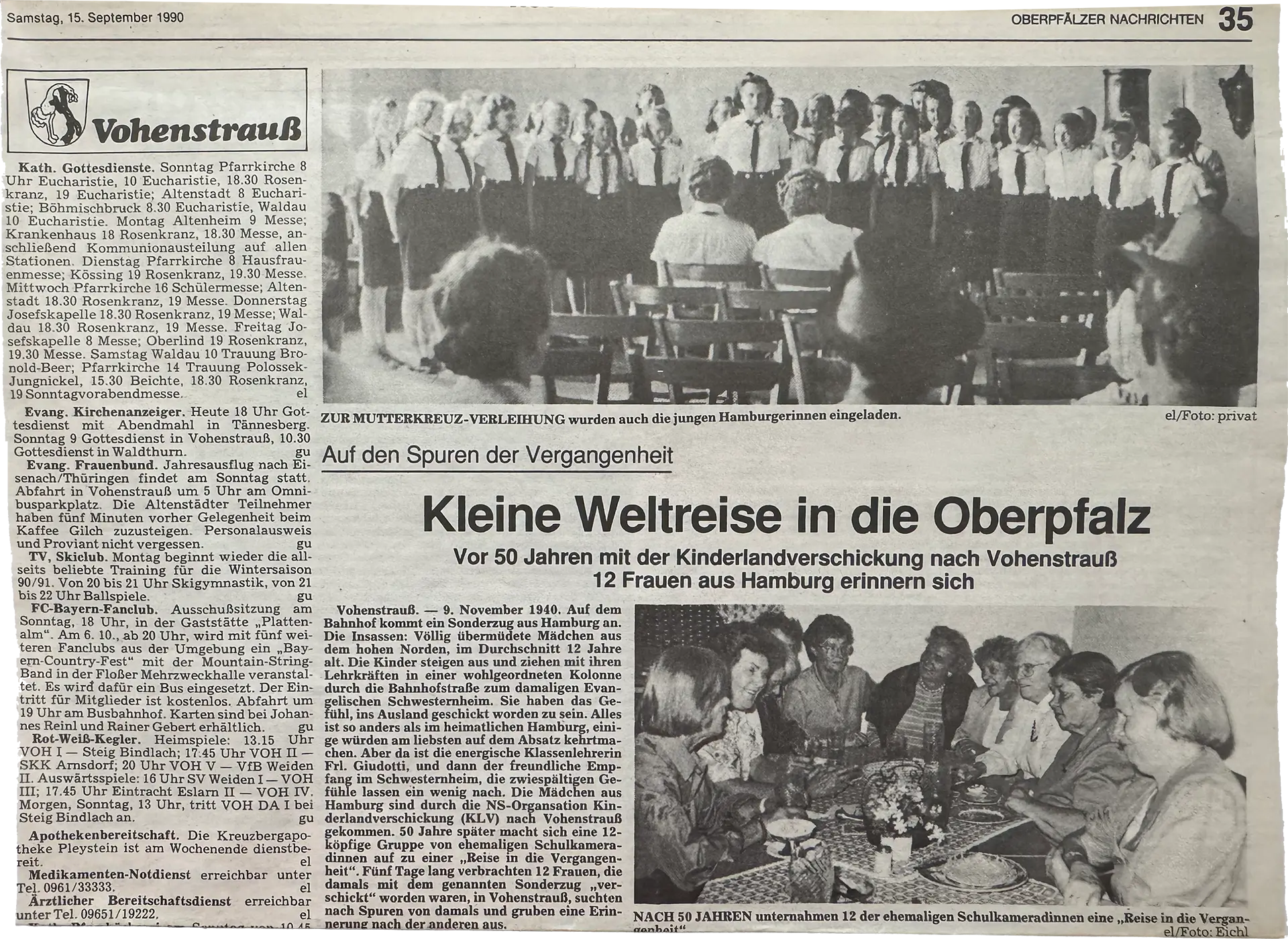
  • ON (Oberpfälzer Nachrichten, September 15, 1990)
  • Gerald Vogelsang, “They’re Coming!”, Buch- und Kunstverlag Oberpfalz

The project “Between Democracy and Dictatorship” is funded by:

The project “Between Democracy and Dictatorship” is supported by “Neustadt lebt Demokratie,” the Evangelical Adult Education Center of the Upper Palatinate, the Federal Ministry of Education, Family, Senior Citizens, Women, and Youth, and the federal program “Demokratie leben!”

Together, the funding partners help preserve history, strengthen democratic awareness, and promote diversity, respect, and social cohesion.